Showing posts with label behavior intervention. Show all posts
Showing posts with label behavior intervention. Show all posts
Friday, February 24, 2023

Thursday, February 16, 2023
Education Links 2/16/2023
 5 Ways to Ensure Clarity for ELLs

https://www.edutopia.org/article/5-ways-ensure-clarity-ells?fbclid=IwAR0QSZe0rUcZz5nc6dohVfdSGdG3pYLgH53cCY1pAhYw2LbYHn1ZBcTFWmw
“Your Brain Is Different — and Wonderful!” Talking to Kids About Dyslexia
What is a behavior intervention plan?
Districts Want More Teachers of Color But Don’t Do Enough to Recruit Them, Survey Finds
AROUND THE WEB IN ESL/EFL/ELL
Controversy Over Gender and Race Has Teachers ‘Walking on Eggshells’
How prioritizing acceptance enables young people to learn in community
Saturday, January 14, 2023
Education Links 1/15/2023

What Is the Zone of Proximal Development? An Overview for Teachers and Schools
CLASSROOM INSTRUCTION RESOURCES OF THE WEEK
Why You Must Make The Complex Simple
Can Anti-Plagiarism Tools Detect When AI Chatbots Write Student Essays?
California schools, community colleges to face slight drop in funding, first in a decade
7 Executive Functioning Deficits That Deflate Motivation for Teens with ADHD
3 reasons why Seattle schools are suing Big Tech over a youth mental health crisis
Tuesday, December 27, 2022
Education Links 12/27/2022
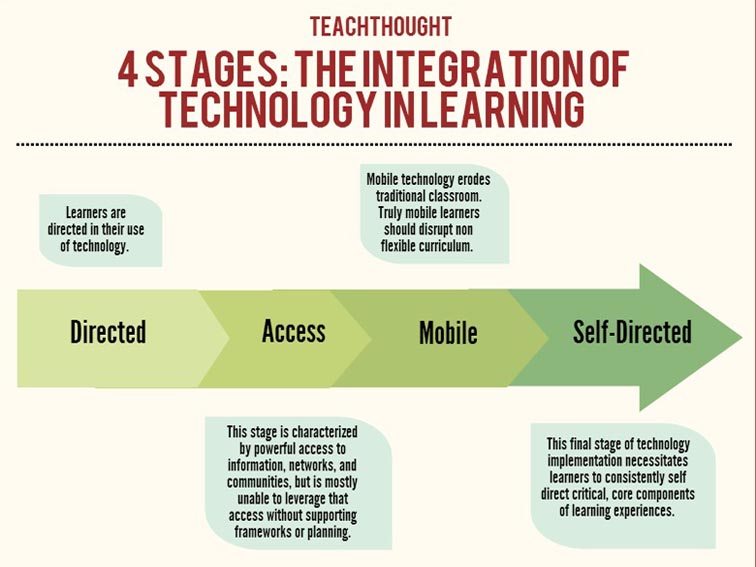
What Does Edtech Integration Look Like From A Student Perspective?
How to Use Breakout Rooms More Effectively
How Drawing Can Lead to Deeper Understanding
Student Scientists Are Publishing Their Research In This Peer-Reviewed Journal
10 CREATIVE SHORT STORY ACTIVITIES FOR THE SECONDARY ELA CLASSROOM
IT SOUNDS LIKE GATES IS PUTTING THAT BILLION FOR MATH EDUCATION INTO ED TECH
How to change your kid's behavior, according to the host of a hit parenting podcast
Tuesday, December 13, 2022
Education Links 12/14/2022

Difficult Behaviors are Expected and Will Happen
10 Preschool Activities that Support Brain Growth and Development
Retrieval Practice Is Costly For Some Students
Top 10 Google Tips of the Year – SULS0181
I’m Your Biggest Fan: A Fan Fiction Writing Project
What To Ask Other Than ‘How Was School’?
Top 10 ADHD News & Research Highlights of 2022
Monday, October 17, 2022
Special Education Focus 10/17/2022
.webp) Young Children Were Massively Overlooked for Special Education. How Will Schools Respond?
Young Children Were Massively Overlooked for Special Education. How Will Schools Respond?
.webp)
There’s A Shortage Of Special Education Teachers — And That’s Nothing New
Mrs. D's Corner has great resources-these activities are really cute. You can subscribe to Stephanie's newsletter

AUTUMN CRAFTS AND ACTIVITIES FOR Special ED KIDS

Classroom accommodations for dysgraphia
https://www.understood.org/en/articles/at-a-glance-classroom-accommodations-for-dysgraphia
Students with dysgraphia can have trouble with handwriting, typing, and spelling. What classroom accommodations can help? Here are some ways teachers can make all aspects of writing easier.
Wrights Law
Autism, Autism Spectrum Disorder (ASD), Pervasive Developmental Disorder (PDD), Asperger Syndrome (AS)
https://www.wrightslaw.com/info/autism.index.htm
This link includes definitions you will find FAQs, articles, legal resources, recommended books, free publications, and a short list of information and support groups.
The following article includes solid strategies for all classes.
Preventing Challenging Behaviors in Young Children. The single best way to address challenging behaviors in young children today is to take steps that they never occur.

Monday, June 6, 2022
Educational Links 6/6/22
.webp)
No, Fewer Books, Less Writing Won’t Add Up to Media Literacy
Edtech Should Be More Evidence-Driven
3 Trademarks of an Effective IEP Goal
https://www.additudemag.com/iep-goals-educational-aims-adhd/
7 HIGHLIGHTS FROM THIS SCHOOL YEAR
How To Handle An Argumentative Student
5 Toxic Phrases To Stop Using With Your Students
Education Buzzwords Defined: What Is Blended Learning?
See how blended learning—a combination of online activities and face-to-face teaching—helps teachers differentiate instruction and spend more time with students.
Wednesday, January 19, 2022
Educational Links 1/20/22

How Has the Pandemic Changed the Way Educators Think About Homework?
Conversing with teachers: Leveraging what we’ve learned from the pandemic
What are the Best Books for Students Who Don’t Like to Read?
How de-escalation strategies can reduce disruptive classroom behaviors
New Research Shows How Bad the Pandemic Has Been for Student Mental Health
California schools get off to a shaky start after holiday break
The Masked Teacher
While face coverings present barriers to easy communication, educators can build a rapport with students by being deliberate in their interactions.
Saturday, May 29, 2021
What Is Up With That Kid?

Classroom problems are obvious: the student is not successful academically or has behavior issues. The solutions are not so obvious. Here is how GenEd and SpecEd can work together for solutions for the student (and the classroom.) Honesty, transparency, clarity between colleagues will produce true solutions for students. Be ready for candid interaction, my GenEd and SpecEd colleagues! There will be questions!
Scenario #1: The student makes an effort, but remains well below standards despite effective interventions.
SpecEd will ask (or should) for documentation of the intervention. The parent should already know how many hours per day for how many weeks the student has been in the intervention--and have products of the work accomplished. The data of the student's further need should not be a mystery to anyone. Parent contact should be regular. GenEd needs to be organized for this. Hopefully, the intervention classes at the school site are coordinating and use the same result templates so a parent or SpecEd teacher can readily identify the strengths and needs of the student during a specific time period. If there is other, more unusual input over a period of time about the student, GeEd needs to document this with type of behavior, date, and class activity.
An anecdotal report might go like this:
10/5/-- Margaret began classwork, but after 10 minutes was drawing rather than writing the assignment. The picture was of a child, but it was one big circle with a smile. She did this for 10 minutes, then sat still, not working, despite many prompts to write.
With accurate data, Admin, GenEd and SpecEd should meet with the parents and may then suggest Special Education testing to the parent, if the parent has not already requested it.
A situation once arose at a Middle School where I was RSP for Grade 6. The structure was four teachers on a team, and I worked in the classrooms of Math and ELA. A Soc. Science teacher clued me into two transfer students she noticed may be SpecEd but perhaps their paperwork hadn't arrived yet.
One student had created an illustration for an essay that struck the teacher as disturbing. She showed it to me, I was able to observe and speak to the student. I contacted the Ed. Psychologist, and the Grade 6 Counselor. After getting contact info from his previous school across country, we discovered the parent had not informed us the student had been identified as ED (Emotionally Disturbed) and had a serious incident the previous school year. We couldn't clarify why the parents did not inform us, but because the Social Science teacher actually checked and read her classes' assignments every day we could get him to the proper placement quickly.
Another student was not able to understand the work at all, but was very popular despite a stutter. Again, the team of Counselor, Ed. Psychologist, SpecEd and GenEd did a search of his records, spoke to the parents (who needed a translator, the Ed. Psychologist was fluent in Spanish) and we found that due to frequent school changes, he had never been tested for SpecEd, or Speech Therapy. I tested him from my end, the Speech Therapist from his end, the Ed. Psychologist from her end, and we were prepared for a meeting which resulted in a better placement.
Scenario #2: The student has shown grade level ability, but is too disorganized to function in the class.
Again, do we have a record of this behavior?
An anecdotal report might go like this:
Luis does well when he has his supplies and brings his homework and outside reading book. But he is missing important items at least 3 times a week. Dates of missing work for March: 3/3, 3/5, 3/9, 3/10, 3/14 etc.
Has GenEd contacted the parents about this lack of functioning? Is there something unusual at home that might be the cause of the disorganization? Now I'm going to get personal, only because I have had to ask myself this question. How organized is the class? How's your classroom management? Are enough cues and directives given to end one activity and start another? Is the class tidy and organized so this student has an appropriate amount of space to function? If the lack of function is not the result of parents or teacher--there could be a Special Ed. reason. Executive functions (ability to be organized) can be impaired by learning disabilities. But not always. If the student's previous teachers are available for comment, ask how little George did last year. So if previous answers to these questions show a need for testing, the SpecEd team will find out--is it ADHD? a learning disability? or just a future Absent Minded Professor who needs a personal assistant? (Kind of kidding about the last, but sometimes parents and teachers feel like they are in that role.)
In my experience as RSP (Resource Specialist) we tested many more students for learning disabilities than qualified for Special Education programs, particularly in Grade 6. That is due to the fact that the huge change in schedule created a perfect storm of confusion for awhile until the kids got their sea legs. But a lack of executive function could well show a need for Special Education support, so please document the need so the student can be fairly evaluated.
Scenario #3: The student is a behavior problem.
Now we are to the real issue to solve. Why do students act up? For attention, for control of the class, or to escape the class through disciplinary action that takes them to the office or maybe to the ramp outside the door (btw, that last strategy is an illegal move and should not happen. Students need supervision.)
Again, do we have a record of this behavior?
An anecdotal report might go like this, and not necessarily only in a referral:
Student (Kayleigh) got out of seat three times in fifteen minutes, and moved around the classroom. She then whacked Angelica on the back of the head, disrupting class.
For a behavior referral for Special Education, you record all instances, and contact with the parents. The team of professionals that is your school and includes you, will research everything about the student, test the student, while effectively managing a positive behavior contract.
At the first, and I mean first, sign of defiance, contact the parent and document. The most effective teachers I worked with, and later emulated, did this simple thing, and ran a peaceful classroom. Also, document the conversation. Is this tedious? Yes, GenEd, it is. I know, I was GenEd, too. But a behavior issue is the most vital to document. If, deep in your heart, you feel this student has an emotional or serious behavioral issue--contact SpecEd, the Counselor, or the Ed. Psychologist. Maybe the student doesn't have serious problems that may lead to self injury or injuries to others. But maybe so, and you could save injuries and lives if the student gets help early.
In one high school class during a reading intervention, a student was doodling on his work one day. We discovered it was a rather graphic picture of two young people, one threatening the other with a knife. Taking the picture to the Ed. Psychologist, and having a meeting with the parent led to counseling for the student who had been bullied and assaulted the previous year. His uncle had been murdered in a gang initiation 18 months before. The student was affected. He received counseling.
To be transparent, a positive behavior plan is the most challenging to coordinate with a team of teachers for effective implementation. Really hard. But we don't give up. Good results help everyone.
When GenEd and SpecEd collaboration really works, there's nothing finer in the school system.
Sunday, October 18, 2020
Educational Links 10/19/2020

How Fan Fiction Inspires Kids to Read and Write and Write and Write
Readers Respond: Should Politics Be Kept Out of the Classroom?
Respectful Redirection: An Evidence-Based Behavior Strategy
Yes, Teachers Are Still Being Evaluated. Many Say It's Unfair
The Most Useful ADHD Accommodations and Modifications for Distance Learning
With cameras running, an Orange County high school reopens; principals answer the call
Ed leaders say finances, politics remain hurdles in COVID-19 response
An Ed Dive: K-12 survey finds administrators nationwide meeting essential needs, but fatigued by limited resources and inconsistent messaging.
Friday, May 15, 2020
Educational Links 5/16/2020

BEST LISTS OF THE WEEK: TEACHING ONLINE AMID SCHOOL CLOSURES
Designing a Meaningful Graduation Ritual in Quarantine
25 Strategies to Engage Students on Your Next Zoom Meeting
How To Handle Brazen Behavior
How to Share Audio and Video in Google Classroom Without YouTube or SoundCloud
Learning Disabilities by the Numbers
Navigating Uncertain Times: How Schools Can Cope With Coronavirus
During the past few weeks, the coronavirus has cast an uncertain future over U.S. education—particularly the ongoing school year. It has also raised a host of questions: Is remote learning possible for every school? How can educators and parents make it a meaningful experience when it’s happened so suddenly? And what roles will teachers, administrators, paraprofessionals and parents play?
Sunday, March 1, 2020
Educational Links 3/2/20

Steps to Make Classrooms More Culturally Responsive
Students Tackle Life's Challenges Together
A Mindset Shift to Continue Supporting the Most Frustrating Kids
Great Tools for Making Mind Maps and Flowcharts
Are Your Diversity Strategies Missing the Mark? Nine Ways to Get it Right
Technology in rural schools: Addressing digital equity
6 Common Myths About Learning and Thinking Differences
There’s a lot of misunderstanding about learning and thinking differences like dyslexia and ADHD. Here are some of the most common myths—and facts to debunk them.
Sunday, February 16, 2020
What Is Oppositional Defiant Disorder?

What Teachers Need to Know About Students With ODD (Oppositional Defiant Disorder)
Why Is My Child So Angry and Defiant? An Overview of Oppositional Defiant Disorder
What Is Oppositional Defiant Disorder?
Defusing Defiance in the Classroom
Oppositional Defiant Disorder Factsheet for Schools
Oppositional defiant disorder in the classroom
Oppositional defiant disorder (ODD) is a childhood disorder that is defined by a pattern of hostile, disobedient, and defiant behaviors directed at adults or other authority figures. ODD is also characterized by children displaying angry and irritable moods, as well as argumentative and vindictive behaviors.
Monday, July 22, 2019
Educational Links 7/23/19

Teaching Your Heart Out: Emotional Labor and the Need for Systemic Change
Students Who Take Music Classes Also Do Better Academically, Study Finds
http://blogs.discovermagazine.com/d-brief/2019/06/24/music-classes-academic-achievement/?fbclid=IwAR0W0Ia5WTGvOedL_YET8Sp9naxJaaTvQfiggUHOEPUzn8naQ31IRbF0DjE#.XTZqpajYqgB
Improve Children's Behavior by Going Outside!
Silent alarms at schools may soon be required by federal law
Building a Culture of Family
Classroom Management: How Teachers Can Address Cell Phones in Class
6 Tips for Managing the Feedback Workload
Providing feedback is proven to increase student learning, and there are ways to make the work involved more manageable.
Subscribe to:
Posts (Atom)